
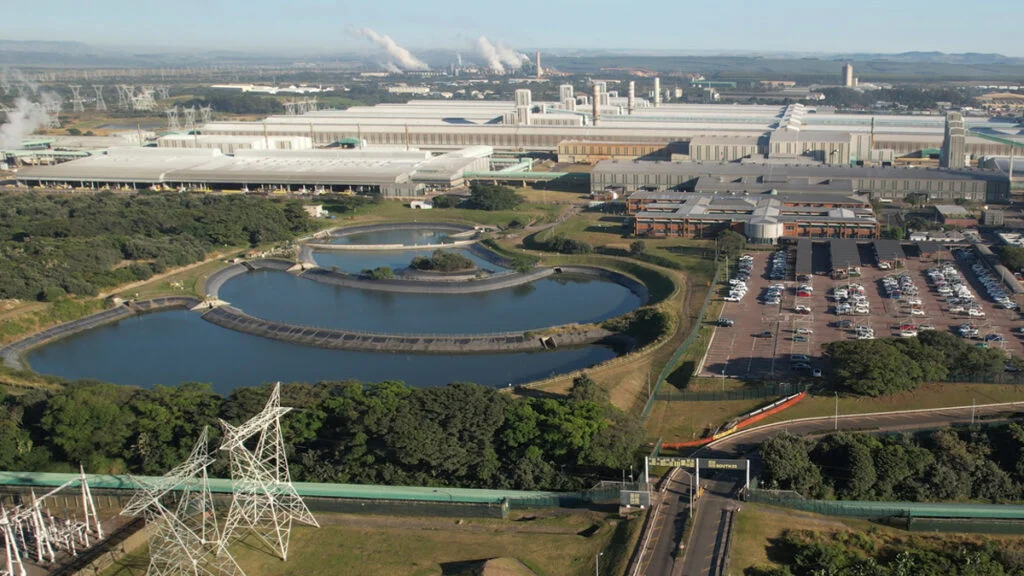
South Africa’s soaring electricity prices have chased smelters out of the country, with these businesses no longer able to leverage cheap, reliable power as a competitive advantage.


This largely stems from Eskom’s mismanagement over the past 15 years, with South African households and businesses footing the bill for the utility’s mistakes.
The current situation, of skyrocketing prices and heavy industry shutting down, stands in stark contrast to the Eskom of the past, energy expert and EE Business Intelligence managing director Chris Yelland said.
Yelland explained that there was a time when Eskom was the cheapest producer of electricity in the world, with its prices half those of the next-cheapest utility.
This created a significant competitive advantage for any company operating a smelter in South Africa, as electricity is the primary input in the production process.
“In the smelting business, the competition is fundamentally international, and the advantage South Africa used to have was the price of electricity,” Yelland said.
“Eskom would put out the message that they are so efficient and so good at operating a utility, as the reason why they could offer these very low prices for electricity.”
This attracted a significant number of smelters to set up shop in South Africa, operated by mining companies and heavy-industry giants.
These smelters were not only highly lucrative for Eskom, but provided thousands of jobs for South Africans and ensured the country could process its minerals locally to export more valuable products.
This boosted foreign exchange earnings, supported the rand, and was a key driver of South Africa’s economic growth story in the late 1990s and early 2000s.
The growth of smelting and heavy industry in South Africa was the result of significant investment in Eskom’s generation capacity in the 1970s and 1980s. This was coupled with sound management in the 1990s and 2000s.
By 1990, Eskom had completed a huge buildout programme over three decades to ensure South Africa’s energy self-sufficiency.
However, this period would also see the seeds sown that would result in Eskom’s present situation, with the government not heeding a warning in 1998 that the utility’s generation capacity would be fully utilised by 2007.
Eskom made a request to the government for additional budget allocations to expand its generation capacity. However, it was rejected by the Mbeki administration, which sought to run a tight fiscal ship.
As the White Paper predicted, Eskom was unable to meet electricity demand in late 2007, which resulted in the first national power outage in South Africa’s history.
This resulted in Eskom being commissioned to build Medupi and Kusile to increase its generation capacity. The design of these plans was rushed, resulting in design flaws, which were coupled with rampant corruption.
These two power plants cost Eskom R464 billion to build. Despite this investment, the utility produces less electricity after building these stations than it did before.