

By Business Reporter


JOHANNESBURG: The transformation of South African supermarket chain Shoprite from a struggling eight-store business into Africa’s largest food retailer remains one of the continent’s greatest corporate success stories, offering valuable lessons for businesses seeking to scale across Africa’s fragmented consumer markets.
At the centre of that transformation is South African billionaire, Whitey Basson, the retail executive who spent nearly four decades building Shoprite into a regional retail empire valued at about US$12 billion, with thousands of stores serving millions of customers across Africa.
Basson’s insights offer a rare look into the strategy that enabled Shoprite to outperform larger rivals and become Africa’s dominant food retailer.
In an interview on the Conversations with Lelethu podcast, he revealed that Shoprite’s rise was built on a combination of bold acquisitions, relentless focus on low prices, rapid decision-making and a deep understanding of customer behaviour.
Shoprite’s modern history began in 1979 when businessman Christo Wiese acquired an eight-store supermarket chain in South Africa’s Western Cape and appointed Basson to lead the business.
At the time, South Africa’s grocery market was dominated by established brands including Pick n Pay, Checkers and OK Bazaars.
Rather than confronting those retailers head-on in Cape Town and Johannesburg, Basson borrowed a strategy from Walmart founder Sam Walton.
“I decided, if I’m going to fight them in the Cape Town area or in the Joburg area, I’m going to go the Walmart route,” Basson said. “So I went to the small towns.”
The strategy allowed Shoprite to establish loyal customers, refine its operating model and expand without engaging in expensive battles in South Africa’s biggest metropolitan markets.
It also enabled the retailer to reach lower-income communities that many competitors had overlooked.

The customer always came first
Basson said one of his earliest decisions was commissioning research to understand what shoppers valued most.
The findings shaped Shoprite’s identity for decades. About 70% of consumers ranked low prices as their biggest priority, while clean stores emerged as the second most important factor.
Those insights became the foundation of Shoprite’s operating philosophy. Basson also believed retail success depended as much on perception as reality.
He explained that shoppers remember the prices of only a handful of products, relying instead on signals such as advertising, store design and brand colours to judge whether a retailer offers value.
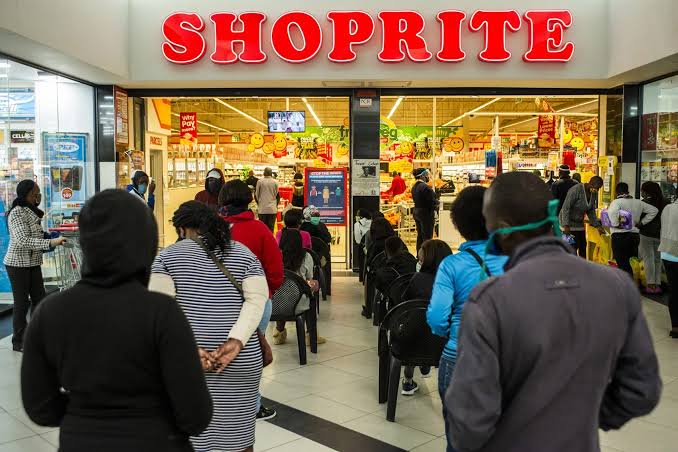
That thinking influenced Shoprite’s now-famous red-and-yellow branding, with red associated with attention and yellow reinforcing affordability.
Basson also deliberately avoided making stores serving lower-income customers appear overly luxurious.
“Don’t make your floors too smart, and don’t make your gondolas too smart, and don’t put so much wood in there, because that is for the upper end of the market,” he said.
Betting on Africa before others
One of Basson’s defining strategic decisions was to expand beyond South Africa shortly after the end of apartheid.
Beginning in the mid-1990s, Shoprite entered markets including Zambia, Mozambique, Botswana, Zimbabwe, Uganda and several other African countries, long before many international retailers considered the continent commercially attractive.
That early-mover advantage enabled the company to establish supply chains, distribution networks and brand recognition that competitors struggled to match.
Industry observers say Basson’s willingness to invest in logistics became one of Shoprite’s greatest competitive strengths.
According to investment manager Shane Watkins, quoted by Financial Mail, Basson “changed the face of retail in Africa” by pioneering centralised distribution systems that lowered operating costs while creating the continent’s first truly pan-African supermarket chain.


Building scale through acquisitions
Instead of relying purely on organic growth, Basson expanded Shoprite through a series of acquisitions that reshaped South Africa’s retail landscape.
The company bought the national Checkers supermarket chain in 1991 before acquiring the struggling OK Bazaars business from South African Breweries in 1997.
The deals dramatically expanded Shoprite’s footprint but carried enormous risks.
Basson recalled that Checkers’ financial losses at the time exceeded Shoprite’s annual revenue.
“I was very scared because it was ten times worse,” he admitted.
Rather than viewing troubled retailers as failed businesses, Basson believed most suffered from poor management structures, excessive bureaucracy and executives disconnected from customers.
Instead of imposing solutions from head office, he spent time with store managers and frontline employees to understand customer experiences.
“Once you walk in there, you know what is wrong and what is right. Ninety per cent is the way that you treat your customers.”
Basson believes one of Shoprite’s greatest competitive advantages was making decisions faster than larger rivals.
He discouraged executives from immediately rejecting new ideas.
“You’re not allowed to say no to me on a suggestion unless you’ve thought for 24 hours,” he said.
The philosophy encouraged managers to search for solutions instead of reasons why proposals could not work.
Basson said the culture was possible because Christo Wiese gave management significant operational freedom.
“I was actually making the decisions the way they should be made, very quickly, very efficiently, with the local guys who worked with me.”
Basson also challenged conventional retail thinking by arguing that supermarkets should avoid owning too many manufacturing businesses.
While factories provide supply security, he warned they also create high fixed costs and force retailers to purchase inventory even when consumer demand changes.
The philosophy gave Shoprite greater flexibility to source products from whichever suppliers could offer the best value.

Lessons for African business
Shoprite’s growth highlights several themes shaping African retail today: scale, efficient supply chains, localisation and price competitiveness.
These factors remain particularly relevant as retailers contend with inflation, currency volatility and increasingly cost-conscious consumers across the continent.
While several international retailers have struggled or exited key African markets in recent years, Shoprite has maintained its position largely because of decades of investment in logistics, procurement and local market knowledge.
For African entrepreneurs, Basson’s career demonstrates that success on the continent depends not only on identifying consumer demand but also on building resilient distribution systems capable of operating across diverse and often challenging markets.
By the time Basson retired as chief executive in 2016, Shoprite had become one of the world’s largest retailers, employing more than 140,000 people and operating over 2,300 stores across Africa.
His journey from managing an eight-store grocery chain to leading Africa’s largest retailer remains one of the continent’s defining examples of long-term value creation through disciplined execution and strategic expansion.
Basson was succeeded by Pieter Engelbrecht, and the company has since continued to expand.
The retailer has continued building on many of the principles Basson established, including price leadership, efficient supply chains, private-label products and digital innovation.
For African businesses seeking to expand across a fragmented and highly competitive continent, Basson’s legacy extends far beyond the growth of a supermarket chain.
His combination of disciplined execution, rapid decision-making, customer obsession and strategic acquisitions created a blueprint for building businesses at continental scale—one that continues to influence African retail long after his retirement.