




























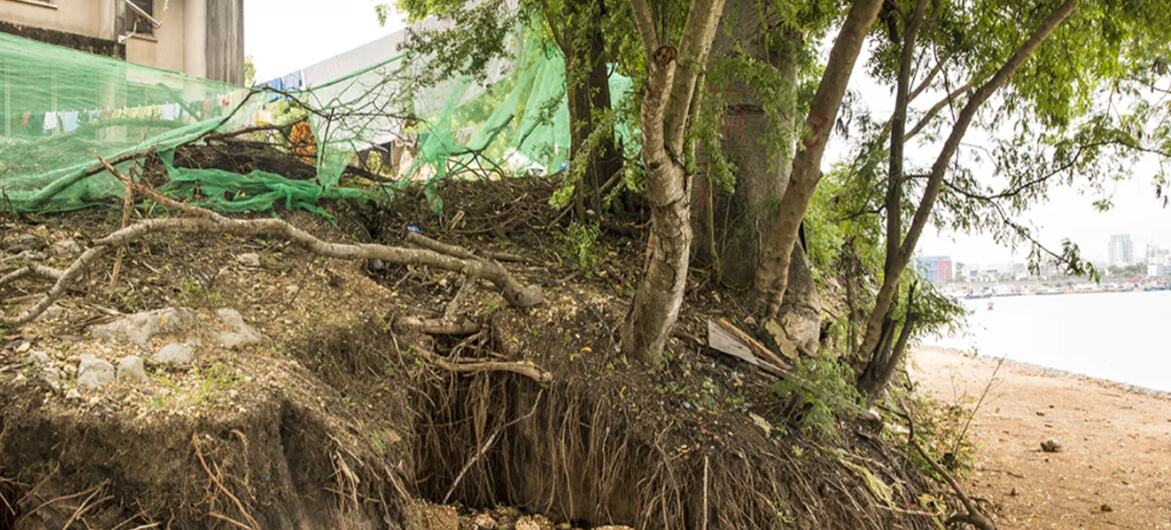
PANGANI, Tanzania — Rising sea levels and saltwater intrusion are threatening farming, fishing and other livelihoods along Tanzania’s northeastern coast, forcing some residents to consider abandoning land that has supported their families for generations.

In Pangani, where the Pangani River meets the Indian Ocean, seawater has pushed about eight kilometres inland, increasing salinity in agricultural areas and contributing to declining coconut production.
For farmer Buga Steven, the impact is measured in the size and number of coconuts harvested from his land.
He said his trees once produced about 5,000 coconuts a season, but harvests have now fallen to less than a third of that, while the coconuts themselves have become smaller.
“Saltwater has entered the farms and affected production,” Steven told UN News.
The spread of saltwater is also being accompanied by the movement of mangroves into areas that were previously used for agriculture.
Steven said communities living along parts of the riverbanks may eventually have to relocate as agricultural land is increasingly affected.
“Everyone living along the riverbanks where mangroves are growing should be given grants so they can move elsewhere,” he said.
Coconut production falls
Other farmers in Pangani have reported similar changes.
Iddi Hashimu Iddi said coconut trees that were once healthier and more productive are now deteriorating as saltwater moves further inland.
“The trunks were much thicker and healthier,” he said. “But rising sea levels have affected them. Salt has moved far inland, productivity has dropped, the trees are unhealthy, and many are dying.”
The decline in coconut production has had wider consequences for households that depend on the crop for income.
“We depended on coconut farming to sustain our livelihoods, educate our children, and meet social obligations,” Iddi said. “Now we face major challenges because of the impacts of sea level rise.”
Farmers are increasingly travelling to higher ground to find productive coconut trees.
Haroub Selemani, a farmer and trader, said large coconuts are now more commonly found further inland.
“For those of us living from Matakani to Jasini, we no longer have proper coconuts,” he said. “If you want large coconuts, you have to go to places like Mafisi or Mseko and further uphill.”
Fishing grounds disrupted
The changes are also affecting fishing communities.
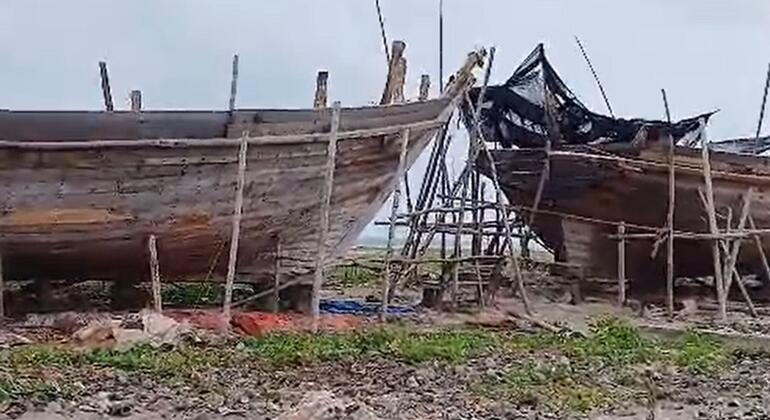
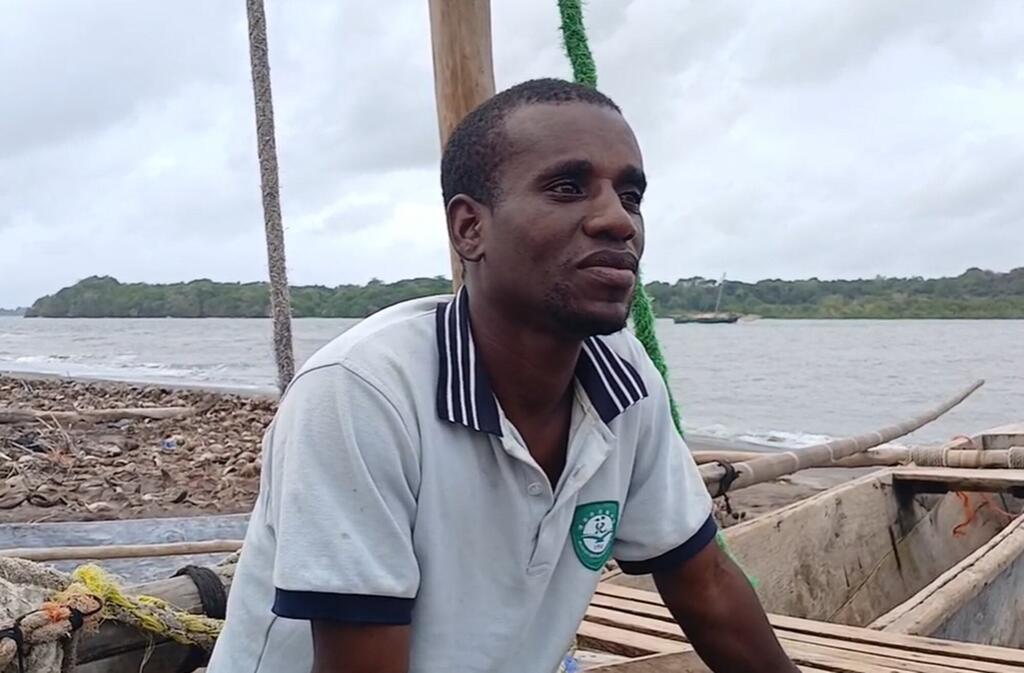
Fisherman Ali Hamis Daudi said coastal erosion and changes to the shoreline have altered traditional fishing and anchoring areas.
He said fishermen could previously rely on knowledge passed from one generation to another to identify where particular species would be found.
“In the past, we knew exactly what depth of water certain fish species preferred. Now the fish have moved,” Daudi said.
He said erosion has also reduced available places for fishing boats to anchor.
“If you come late, you may not find a place to anchor your boat,” he said.
The disruption is particularly significant in communities where fishing and agriculture provide the main sources of income.
Global rise, local consequences
The changes in Pangani are occurring against the backdrop of a broader rise in global sea levels.
The United Nations has warned that almost 770 million people — roughly one in 10 people worldwide — live in coastal areas less than five metres above the high-tide line.
Global mean sea level rose at an average rate of 4.7 millimetres a year between 2014 and 2023, while the increase reached 5.9 millimetres in 2024.
The rise is primarily driven by the melting of glaciers and ice sheets and the expansion of seawater as the oceans warm.
Tanzania is particularly exposed because of its extensive coastline and the concentration of communities and economic activity in coastal areas.
UNEP says Tanzania’s coastal regions face climate-related threats including sea-level rise, coastal erosion, saltwater intrusion and damage to infrastructure. Its adaptation programmes have included work in Pangani and other coastal districts.
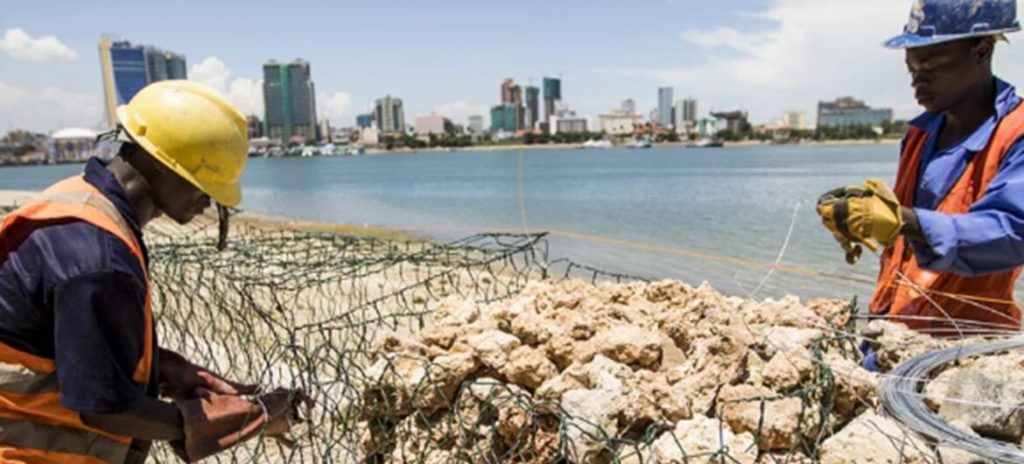
UNEP-supported adaptation measures in Tanzania have included mangrove restoration, water-harvesting systems, relocation of salinised wells and construction or upgrading of seawalls, groynes, dikes and spillways.
Clara Makenya, UNEP’s representative in Tanzania, said saltwater intrusion could have consequences extending beyond individual farms.
“When saltwater enters inland areas and affects agriculture, it ultimately impacts food security as a whole,” she said.
Saltwater can also affect freshwater sources and infrastructure, while increasing salinity can make water unsuitable for some household uses.
Seawalls and mangroves
Authorities and development partners have been pursuing both engineered and nature-based measures to protect vulnerable coastal communities.
UNEP says previous programmes in Tanzania have combined seawalls and other coastal infrastructure with restoration of mangrove forests and coral reefs.
Makenya said the two approaches could complement each other, with the appropriate response depending on local conditions.
“Infrastructure and nature-based systems complement one another,” she said. “What matters is determining which approach is suitable in a particular location.”
But adaptation efforts have not always succeeded.
Daudi said attempts to establish mangroves in Magarawani failed because of the sandy terrain. Casuarina trees planted as an alternative were also destroyed by the ocean.
Tanzania has already invested in coastal defences. The UN says projects supported by UN agencies and the Tanzanian Government have included more than 2,400 metres of seawall structures in vulnerable coastal areas.
The Tanzanian government has also highlighted the scale of the challenge at international level. In a statement to the UN, Tanzania said sea-level rise on mainland Tanzania and Zanzibar had been increasing by about six millimetres a year since 2002, while warning of coastal erosion and impacts on vulnerable communities.
Calls for relocation
For some residents of Pangani, however, adaptation may eventually mean leaving affected areas.
Daudi said a seawall could help protect the harbour and prevent further erosion.
“To stop the erosion here, perhaps a seawall should be built,” he said. “If a wall is constructed, the sea will not advance further inland.”
Without intervention, he warned that the harbour could eventually become unusable.
Iddi, meanwhile, said affected residents should receive compensation to enable them to relocate.
“The most important thing is for the government to compensate all of us who have been affected,” he said. “Give us compensation and allow us to leave these areas behind.”
The debate over whether coastal communities can remain in place or will eventually have to retreat is becoming increasingly urgent as sea levels continue to rise.
For Pangani’s farmers and fishermen, the issue is no longer a distant climate projection. It is already reflected in smaller coconut harvests, changing fishing grounds, eroding shorelines and farmland increasingly affected by saltwater.
UN News