


























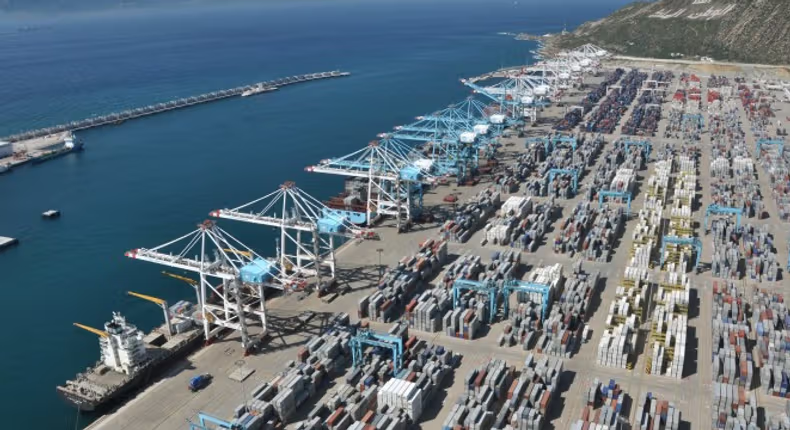
Africa’s largest container port, Morocco’s Tanger Med, is preparing for a possible jump in ship traffic as global shipping lines abandon Middle East routes and sail around Africa instead

Major carriers including Maersk, Hapag-Lloyd and CMA CGM have begun diverting vessels away from the Suez Canal due to rising security risks in key waterways. The shift is forcing ships onto the longer route around the Cape of Good Hope, reshaping global trade flows.
Idriss Aarabi, managing director of Tanger Med, told Reuters in an email that the port could see more vessel calls as a result, though the impact is still emerging.
“The full impact on cargo flows is not expected to be visible until mid-to-late April 2026,” he said, adding that no cancellations have been recorded so far.
ADVERTISEMENT
The disruption shows a wider breakdown in one of the world’s busiest trade corridors. Since late 2023, attacks on ships in the Red Sea have pushed operators away from the Suez Canal and the Bab el-Mandeb Strait.
More recent tensions, including U.S. and Israeli strikes on Iran and the reported closure of the Strait of Hormuz, have deepened the shift.
For ports like Tanger Med, located at the entrance to the Mediterranean, this could translate into higher traffic and greater strategic importance in global logistics.
But the shift comes at a cost. Rerouted vessels are taking 10 to 14 days longer to reach northern hubs, increasing fuel use and tightening shipping capacity.
Carriers have responded by adding new charges, including war-risk and deviation fees ranging from $1,500 to $3,300 per container, rising to about $4,000 for specialised cargo, Aarabi said.
ADVERTISEMENT
The port said it is focusing on managing capacity and avoiding congestion as volumes begin to adjust.
Tanger Med handled 11.1 million containers in 2025, up 8.4 per cent year-on-year, outperforming several Mediterranean rivals and reinforcing its position as a key link between Africa, Europe and global markets.
If disruptions persist, analysts expect more shipping activity, and related services like marine fuel supply, to shift towards African routes, creating both opportunities and pressure for ports along the continent.
Business Insider