
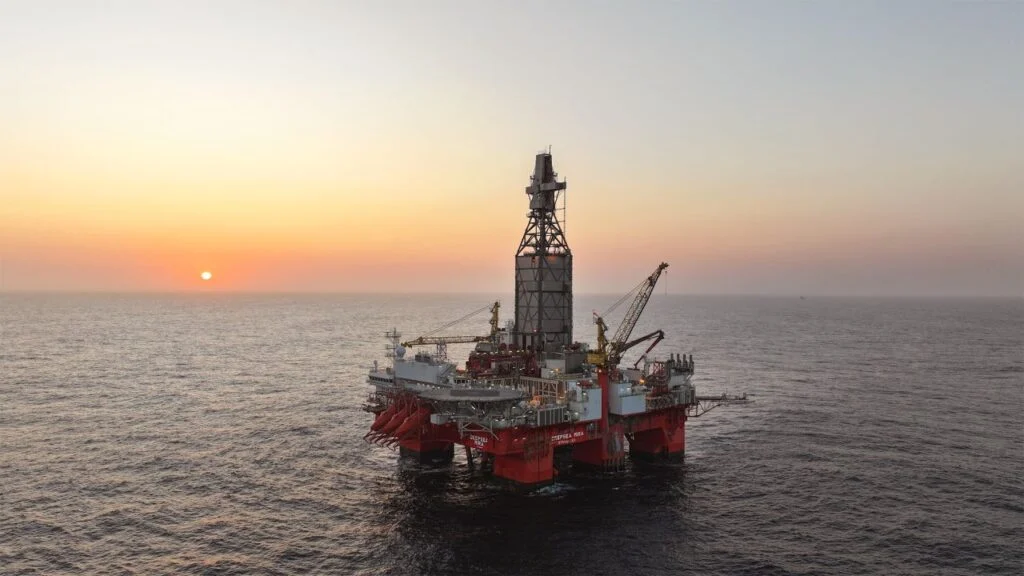
TotalEnergies’ Venus discovery in Block 2913B remains the most advanced offshore development project in Namibia, according to the firm’s partner, Canada-headquartered Meren, which holds an effective 3.8% indirect interest in the discovery through its shareholding in Impact. As the front-end engineering and design (FEED) scope has been finalized, this is said to provide a mature technical basis for development planning.


Located offshore southern Namibia, Block 2913B covers approximately 8,215 square kilometers in water depths up to 3,000 meters. PEL 56 is operated by TotalEnergies EP Namibia, which has a 50.5% interest, while QatarEnergy holds a 30% stake, NAMCOR 10%, and Impact Oil & Gas Namibia the remaining 9.5%.
Venus, which is described by the operator and the government as the anchor project for the country’s first deepwater oil development, is considered to be a fully appraised discovery with a defined development concept, entailing a large-scale deepwater subsea system tied back to a floating production, storage, and offloading vessel (FPSO), consistent with comparable deepwater developments globally.
TotalEnergies has submitted a field development plan (FDP) for Venus, which is under review by the Namibian authorities, initiating formal engagement toward a potential final investment decision (FID), subject to completion of regulatory, fiscal, and environmental processes.
The French giant expects the Venus phase 1 development to recover approximately 750 million barrels of oil, with a planned production capacity of around 150,000 barrels per day. The development concept targets first oil potentially in 2030, subject to FID timing by the end of 2026.
These timelines and metrics remain forward-looking and contingent on regulatory approvals, fiscal finalization, and execution milestones. The company has indicated that estimated capital costs have been firmed up through competitive engineering, procurement, and construction (EPC) bidding, supporting readiness for the potential FID in 2026.
The project design incorporates measures to minimize emissions intensity, including reinjection of associated gas and a stated development objective of maintaining a comparatively low upstream emissions profile for a deepwater project. As the project maturation continues, Namibia is preparing for potential offshore oil and gas development.