


Kenya has become the first African country, and only the second globally, to secure technical assistance through the Santiago Network on Loss and Damage, marking a significant milestone in international climate policy.
The support package, valued at approximately $700,000 (approximately Sh90 million), will fund a comprehensive assessment of climate-related loss and damage experienced across Kenya over the past decade.
Announcing the award on the sidelines of the UNFCCC Subsidiary Bodies (SB64) Climate meetings in Bonn, Germany, Principal Secretary for Environment and Climate Change, Dr Festus Ng’eno, described it as a major milestone in advancing climate resilience and addressing the impacts of climate change.
He said it was a recognition of “Kenya’s leadership in climate action and its commitment to building resilience against the growing impacts of climate change”.
Dr Ng’eno is accompanied in Bonn by National Environment Management Authority director-general Mamo Boru Mamo, National Environment Trust Fund chief executive officer Samson Toniok, and the head of the Climate Change Directorate in the ministry of Environment, Dr Pacifica Ogolla.
Also Read: Kenya takes the lead as Africa redefines climate finance
The development was formally communicated to PS Ng’eno by Santiago Network’s Liz Carabine inside the UN conference centre in Bonn. Kenya had indicated in its bid that the assessment would strengthen its ability to quantify climate-related losses and better position it to access international support for resilience and recovery initiatives.
Mr Baboucarr Nyang, cordinator of the Climate Action Network, described the funding as “proof that when the architecture of climate finance works as intended, it can deliver for Africa, and now it must deliver faster and for all”.
The Santiago Network, established under the United Nations Framework Convention on Climate Change (UNFCCC) in 2019 to provide technical assistance to developing countries that are particularly vulnerable to climate change, connects countries with experts, institutions, and technical organisations capable of helping them assess and respond to climate-related losses and damages. Its role has become increasingly important following the establishment of the Loss and Damage Fund at COP28 in Dubai in 2023 as robust evidence and technical assessments are often necessary to support future financing requests.
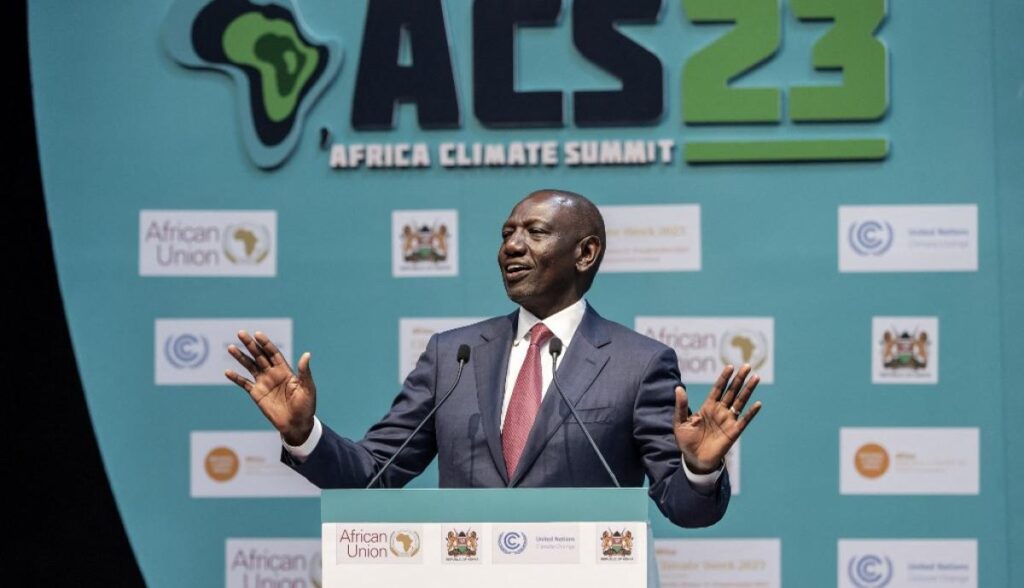
The funding, though not significant in terms of quantum, could also be a sweet victory for President William Ruto, who in Dubai in 2023 positioned Kenya at the forefront of Africa’s climate diplomacy, advocating for an African-led climate agenda centred on green industrialisation, climate finance, and the implementation of mechanisms to address loss and damage.
Also Read: Climate finance has failed Africa twice over— how to fix it
Ruto was also a strong supporter of the Network and mounted a bid to host its secretariat in Nairobi. However, the decision ultimately went to Geneva, Switzerland, prompting disappointment from Kenya and other African negotiators, who argued at the time that locating the secretariat in Africa would have strengthened the participation and representation of countries most affected by climate-related loss and damage.
Mr Amos Wemanya of Power Shift Africa said that, “for Africa, this is an important step from recognition of losses to addressing them”, and that “the next challenge is ensuring that evidence unlocks finance at the scale communities need”.
“As climate impacts intensify, the real test now is whether technical assistance can translate into faster action, stronger evidence, and ultimately greater financial support through the Loss and Damage Fund,” he added.
The Nation understands that the funds will finance the examination of both economic and non-economic losses and damages in the country between 2015 and 2025 across multiple sectors. The assessment will also develop projections of future climate-related losses through 2035.
“The move to pioneer Kenya as the first country in Africa to document Losses and Damages signifies positive progress on climate action. Kenya is among African countries that continues to experience losses and damages, floods destroying critical infrastructure, communities getting displaced, cultures lost, livelihoods disrupted, while economic gains get rolled back significantly. It is long overdue for countries on the frontline of the climate crisis to receive support to build resilience. Kenya’s allocation points to shifting climate actions, from frameworks, roadmaps and dialogues to actual implementation.” Said Fred Njehu, Pan African Political Strategist at Greenpeace Africa.
The process is expected to involve government agencies, technical experts, local communities, and other stakeholders, and the resulting evidence base will help the government to better understand the scale of climate impacts, identify the most vulnerable sectors and regions, and strengthen planning for resilience and recovery.
The assessment is also expected to support resource mobilisation efforts. By quantifying climate-related losses, Kenya will be better positioned to make the case for international support and investment. Reliable data on climate impacts can strengthen proposals to climate funds, development partners, and other financing mechanisms.
Nation Media Group