

By a Correspondent


Malawi is set to expand its lake transport capacity under a partnership with Chinese contractor Xiao Xiang Investment that will see four new vessels built alongside a new port facility at Chipoka in Salima.
The agreement, formalised through a memorandum of understanding signed at Capital Hill in Lilongwe, is expected to strengthen water-based freight and passenger transport while reducing the country’s heavy dependence on road networks.
Under the deal, Xiao Xiang Investment will construct two dry-cargo vessels, a fuel tanker and a passenger vessel. The new fleet is expected to complement Malawi’s ageing lake transport infrastructure and eventually provide additional capacity as the country’s flagship passenger ship, MV Ilala, undergoes major rehabilitation.
Bright Kumwembe, principal secretary in the Ministry of Transport and Public Works, said the timing of the investment was critical as MV Ilala is due for major repairs.
According to Kumwembe, expanding lake transport could lower logistics costs, ease congestion and pressure on major road corridors, including the M1 highway, while creating alternative routes for the movement of goods.
“Once operational, the new ships and port are expected to cut logistics costs, ease pressure on the M1 highway, and open up cheaper trade routes across the region,” Kumwembe said.
“This will strengthen water transport, support cross-border trade, and make it easier for our agricultural and mineral products to reach markets.”
The addition of new vessels would enable authorities to take the vessel out of service for rehabilitation without cutting off transport links for communities living along the lakeshore, he said.
The project also has broader economic implications for Malawi, a landlocked country that relies heavily on road transport to move goods and connect producers to domestic and regional markets.
The Malawian government expects improved water transport to support cross-border commerce and make it easier for agricultural and mineral commodities to reach markets.

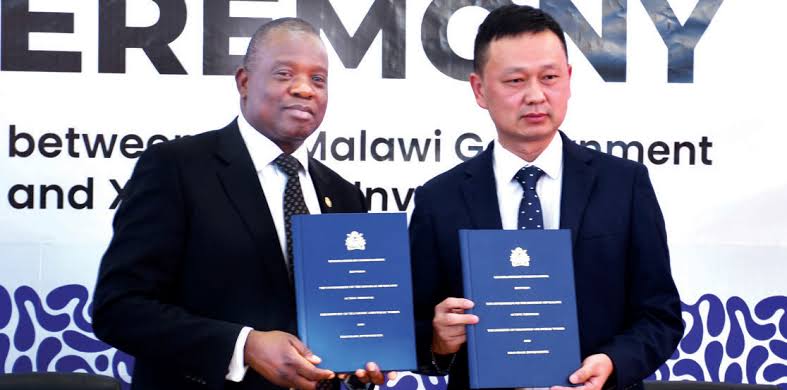
The planned port at Chipoka is expected to further enhance the economic impact of the investment by providing infrastructure to support the movement of cargo and passengers through Lake Malawi.
For Malawi, the development comes as businesses and policymakers seek to reduce transport costs and improve connectivity amid the country’s persistent infrastructure constraints. A more efficient lake transport network could provide an alternative to road freight for selected commodities, potentially reducing pressure on the country’s road infrastructure and improving access to markets.
Chen Cheng, managing director of Xiao Xiang Investment, said the partnership would help address Malawi’s transport challenges and reduce the cost of doing business.
The project underscores the potential role of Lake Malawi as a strategic transport and trade corridor, particularly if investment in vessels and port infrastructure is matched by improved links to roads, railways and regional markets.
The success of the initiative will ultimately depend on the timely construction and commissioning of the vessels and port, as well as the development of an integrated logistics network that enables water transport to connect efficiently with other modes of transport.
If implemented effectively, the investment could help reposition Lake Malawi from a largely underutilised transport asset into a more important component of the country’s logistics infrastructure, supporting trade, agriculture, mining and regional commerce.