
By Gabriel Manyati


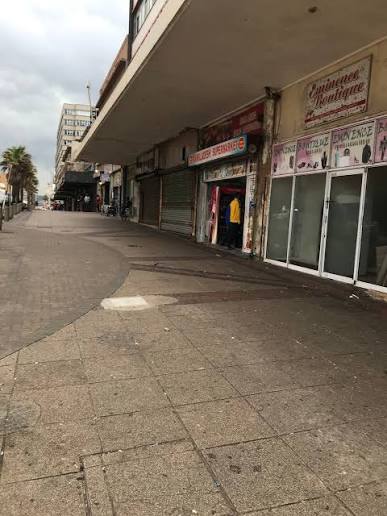
In the heart of Johannesburg’s Hillbrow, once a humming commercial artery, metal shutters hang like eyelids half-closed in exhaustion. Pavements that should echo with the chatter of shoppers and the clatter of trolleys lie deserted under the winter sun.
A Somali shopkeeper peers nervously from behind a cracked window, scanning the street for the next wave of marchers. Bundles of unsold airtime vouchers gather dust beside empty shelves.
“Yesterday, we closed early,” he says quietly. “Today, maybe we don’t open at all.”
The ongoing anti-immigrant protests that gripped South Africa in late June 2026, culminating in a nationwide march on the 30th organised by groups such as March and March, have left more than political rhetoric in their wake. They have inflicted a tangible economic wound on the very communities they purport to defend.
Foreign-owned tuckshops, salons, restaurants, and cellphone stores stand particularly exposed, yet the pain radiates outward, ensnaring South African-owned businesses, wholesalers, landlords, transport operators, and informal traders whose fortunes are inextricably linked.
Take Thabo Nkosi, a South African wholesaler supplying goods to spaza shops across Gauteng townships. “My deliveries are down by half,” he explains from his warehouse, where pallets of maize meal and cooking oil sit idle. “The foreign traders who buy from me have either closed or gone home. Now my own staff are asking if I can keep them on.”
Nkosi’s story is repeated in Rosettenville, where one business owner, speaking anonymously, reported a 30 percent drop in turnover for June.
“Our customers have left, not just the undocumented, but legal ones too, who feel unsafe. I’ve lost two of my best workers. I was just recovering from Covid. I don’t know if I can survive this.”
The human cost is immediate. In Durban’s Mariannridge and Clermont, foreign-owned supermarkets like Lovemore Supermarket were looted, with losses exceeding R1 million in one case. A Somali family that had operated there for over a decade and employed 19 locals suddenly found their livelihood, and those jobs, in ruins.
Similar scenes unfolded in parts of Johannesburg and elsewhere, where vigilante actions and opportunistic looting forced pre-emptive closures. Informal markets in townships, the lifeblood of local entrepreneurship, emptied as traders stayed away out of fear.
South African business owners are not immune. A clothing retailer in Boksburg, who sources stock from immigrant wholesalers, watched foot traffic evaporate. “They target the foreigners, but when the area dies, everyone suffers,” she says.
Landlords face vacant premises and unpaid rent. Transport operators report fewer goods to move. Customers, both local and foreign, have altered habits, opting for safer, more distant malls or reducing non-essential purchases. One regular shopper in Alexandra township lamented: “I used to buy fresh vegetables cheaply from the Malawian lady down the road. Now I pay more at the big store, or I go without.”
Economists paint a sobering broader picture. Migrants, roughly 5 percent of the population, are estimated to contribute around 9 percent to GDP through formal and informal activities, often creating more jobs than they occupy. A 2018 World Bank analysis found that, for every migrant employed, approximately two jobs are generated for South Africans via business activity and spending. Their departure risks labour shortages in agriculture, construction, retail, and hospitality.

Loren Landau, a migration expert, has described the unrest as imposing a “xenophobic tax” running into billions of rand, encompassing direct losses, disrupted supply chains, heightened security costs, and longer-term damage to investor confidence and tourism. Business Unity South Africa (BUSA) has warned of threats to cross-border trade and diplomatic relations, with countries like Ghana, Nigeria and Malawi repatriating citizens.
Retail associations and chambers of commerce echo these concerns. Small business organisations highlight increased spending on private security and insurance claims that many fear will not be met. Statistics South Africa and South African Reserve Bank data underscore the fragility: high unemployment (around 33 percent) and sluggish growth make the economy particularly vulnerable to such shocks.
Municipal revenues dip as trading declines, further straining service delivery in already pressured townships.
This is not the first time. Previous waves of xenophobic violence, notably in 2008, when dozens were killed and thousands displaced, and in 2015 and 2019, followed similar patterns: economic frustration channelled towards visible immigrant entrepreneurs, followed by looting, business closures, and slow recovery. The 2021 unrest after Jacob Zuma’s imprisonment amplified the template, costing billions.
What distinguishes 2026 is the scale of coordinated marches, social media amplification, and the explicit “deadline” rhetoric, occurring against a backdrop of post-pandemic recovery struggles and local elections. Academic studies from the African Centre for Migration & Society and others consistently show that, while grievances over undocumented migration, crime, and service delivery are real, scapegoating migrants overlooks structural failures and the net positive role of entrepreneurship in township economies.
Protest organisers, such as Jacinta Ngobese-Zuma of March and March, frame their actions as defending South African jobs and resources. “We want undocumented foreigners out so locals can thrive,” one representative stated during a march. Government and police responses emphasise the rule of law, with deployments and condemnations of violence, yet critics note insufficient proactive protection for businesses.
Municipal authorities have promised investigations, but many affected owners remain sceptical about swift restitution.
Resilience flickers amid the despair. A Nigerian salon owner in Cape Town, who stayed despite threats, says: “We employ South Africans. We pay taxes. This fear will pass, but the damage to trust takes longer to heal.”
A South African employee in a foreign-owned store adds: “Whether the boss is local or not, we all just want to feed our families.”
As the dust settles on shuttered shops and quiet taxi ranks, the wider implications loom. Lost tax revenue, reduced consumer confidence, employment losses, and eroded investor appetite threaten South Africa’s fragile economic recovery.
Every closed shopfront symbolises not only immediate income foregone but the erosion of the mutual confidence upon which commerce, and communities, depend. Economies thrive on trust; when fear supplants it, the price is paid by all.