


























West African Correspondent

Ghana has rejected a GH¢20 million (US$1.78 million) donation from telecommunications giant MTN to support citizens repatriated from South Africa following a wave of anti-immigrant hostility.
According to The EastAfrican, Ghana’s Ministry of Foreign Affairs said the government had already made adequate financial provisions to cover the evacuation of its nationals and provide support after their return home.
The ministry said it appreciated the offer from MTN Ghana but had decided not to accept it.
The donation had been announced by MTN Ghana board chairperson Dr Ishmael Yamson. The government said the matter had already been discussed with Yamson and MTN Ghana chief executive during a meeting with Foreign Affairs Minister Samuel Okudzeto Ablakwa on August 14.
Accra said it would instead fund the evacuation and assistance programme from state resources and publish a detailed account of the costs once the operation is completed.
“The Ministry of Foreign Affairs assures the general public that it will present a comprehensive account of the total cost of the evacuations as soon as the exercise is concluded, in the interest of transparency and accountability,” the ministry said.
Ghana spent $1m on evacuation
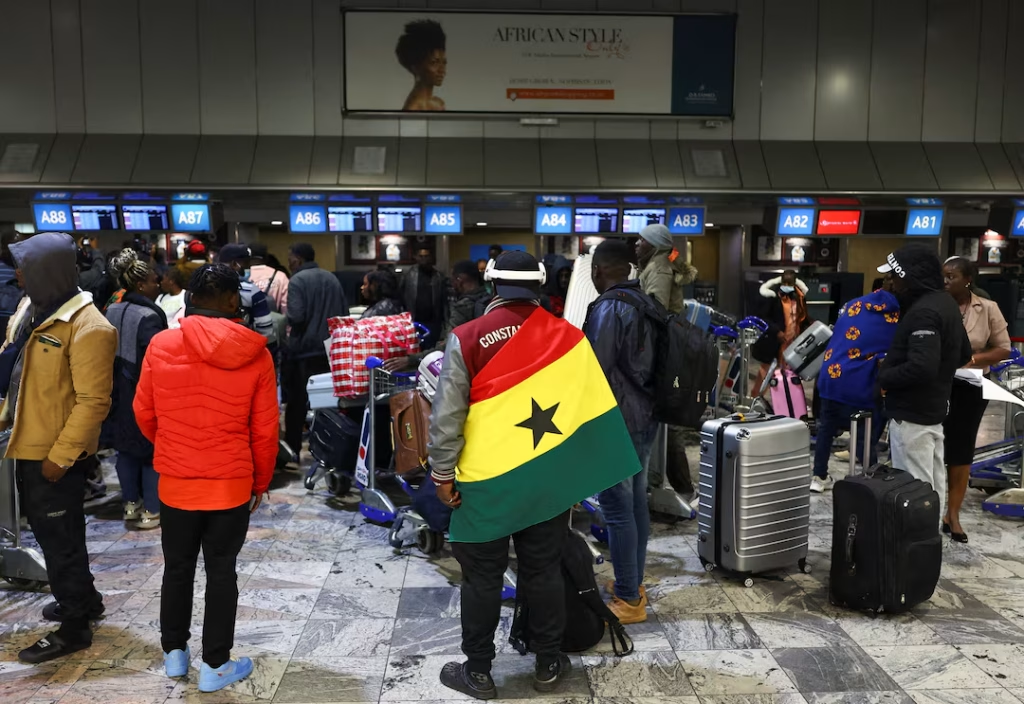
The decision comes after Ghana launched a repatriation programme for nationals caught up in rising anti-foreigner tensions in South Africa.
Ghana has said it spent about US$1 million on rescue flights. The first evacuation flight, carrying about 300 Ghanaians, arrived in Accra in May, while by July the government had entered the final phase of an operation aimed at bringing home another 1,000 citizens. More than 900 people had already been evacuated.
The evacuations followed protests organised by the South African anti-immigration movement March and March, which called on undocumented migrants to leave the country.
Despite rejecting MTN’s financial assistance, Ghana sought to reassure foreign investors that the decision should not be interpreted as hostility towards international companies.
Accra stressed that it remained open to investment from companies regardless of their country of origin.
The controversy also comes as South Africa seeks to recover the cost of deporting and repatriating foreign nationals.
Pretoria has asked several African governments to contribute towards nearly US$18 million incurred in deporting or repatriating more than 80,000 migrants, with the bill covering transport, temporary accommodation, processing and staffing. Malawi, Ethiopia and Nigeria are among the countries approached.