

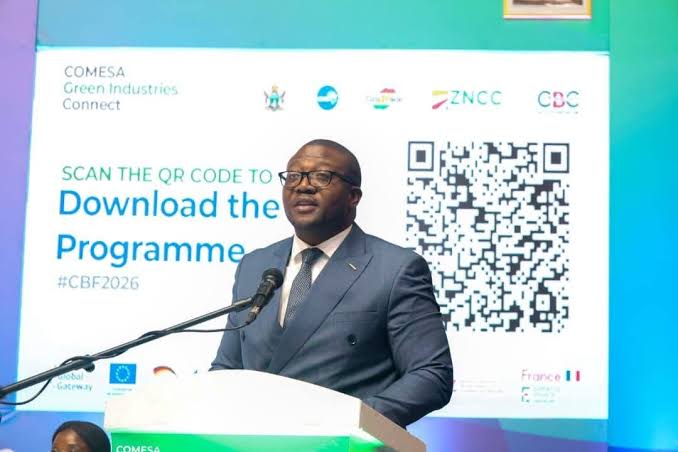
By Tichaona Katsvamutima
Zimbabwe has proposed the establishment of a regional industrial financing fund to support manufacturing, recycling and cleaner production, as the country seeks to strengthen domestic industries and increase value addition to its natural resources.
Industry and Commerce Minister Nqobizitha Mangaliso Ndlovu made the proposal on Monday while addressing the COMESA Green Industries Connect Conference at the Harare International Conference Centre.
The proposed COMESA Circular Economy Fund would finance businesses investing in energy-efficient equipment, recycling infrastructure and environmentally sustainable manufacturing.
“I propose that COMESA explore the establishment of a COMESA Circular Economy Fund to support viable enterprises investing in cleaner production, energy-efficient equipment, recycling infrastructure and the conversion of waste into productive inputs,” Ndlovu said.
The proposal comes against the backdrop of industrialisation challenges facing Zimbabwe and other regional economies, including the need for reliable electricity, modern production facilities, investment capital and greater domestic processing of raw materials.
Ndlovu acknowledged the importance of addressing these constraints, warning that regional industrialisation ambitions must translate into practical investments and employment opportunities.
“Our immediate responsibility is to convert these commitments into implementation,” he said.
The minister revealed that Zimbabwe was working with the Climate Technology Centre and Network to develop a National Decarbonisation Roadmap for the cement industry, while identifying opportunities for cleaner production in iron and steel manufacturing and mineral processing.
He also challenged African countries to move beyond importing finished electric vehicles and develop their own manufacturing capabilities.
“Our ambition must extend beyond importing finished products to developing the skills, technologies and productive capabilities required to capture a greater share of the emerging value chains,” Ndlovu said.
He cited Zimbabwe’s shipment of locally processed lithium sulphate to China as an example of the economic opportunities presented by mineral beneficiation.
However, the broader challenge remains translating the country’s mineral wealth into sustained industrial production, competitive exports and meaningful employment creation.
Ndlovu urged COMESA member states to strengthen regional value chains, improve industrial infrastructure and mobilise private-sector investment.
The conference follows a September 8 meeting of COMESA industry and investment ministers, which endorsed initiatives promoting cleaner manufacturing, circular economies and stronger regional industrial cooperation.
With Zimbabwe assuming the COMESA chairmanship, Ndlovu said governments must be judged by concrete economic results rather than policy declarations.
“The success of this agenda will be measured not by the number of strategies adopted, but by the investments mobilised, factories modernised, resources used more efficiently, enterprises developed and jobs created,” he said.
The proposed regional fund has yet to be established, with its financing arrangements, eligibility requirements and implementation framework still to be determined.