


By Tichaona Katsvamutima
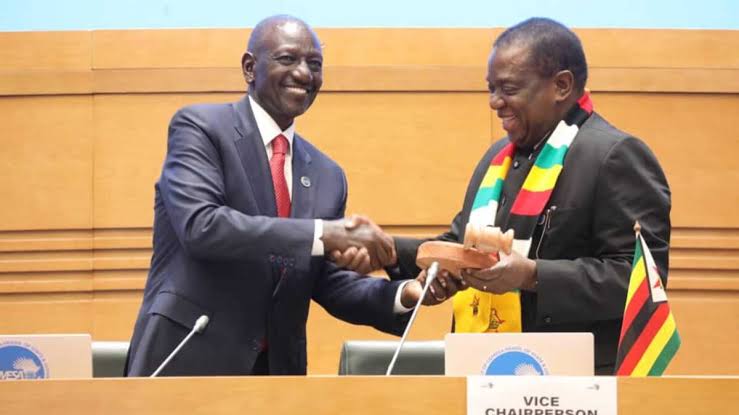
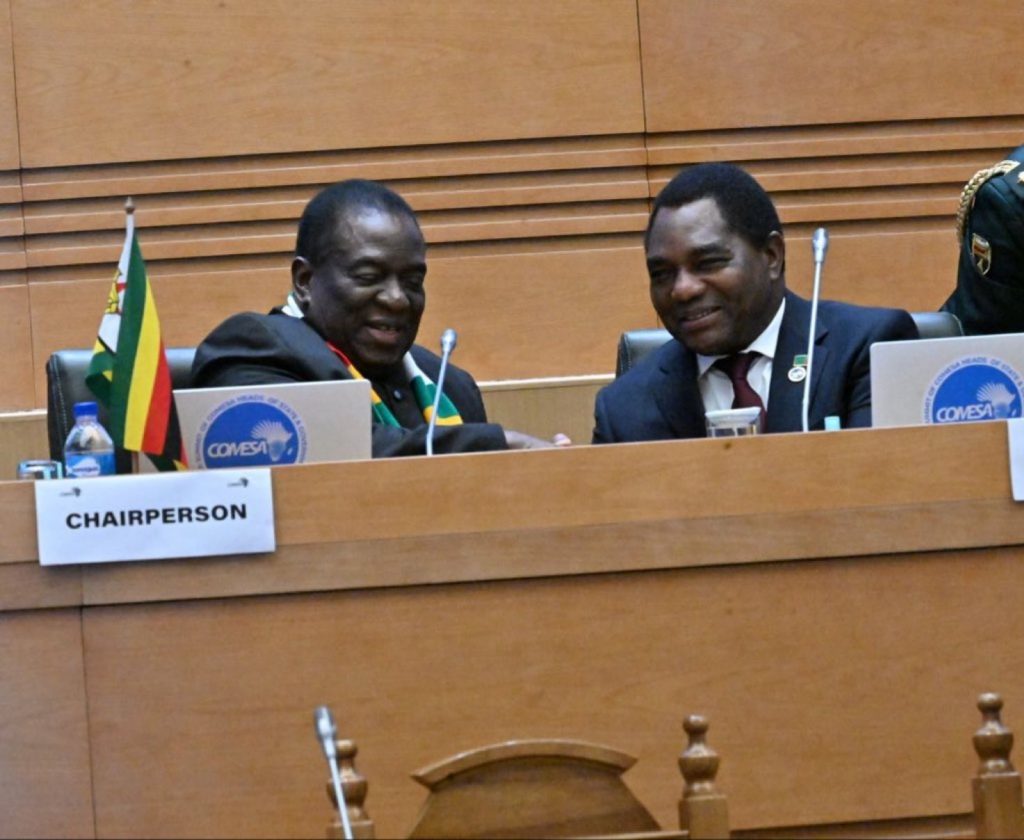
Zimbabwe President Emmerson Mnangagwa has assumed the chairmanship of the Common Market for Eastern and Southern Africa (COMESA), calling for decisive action to dismantle trade barriers, accelerate industrialisation and unlock investment across the regional bloc.
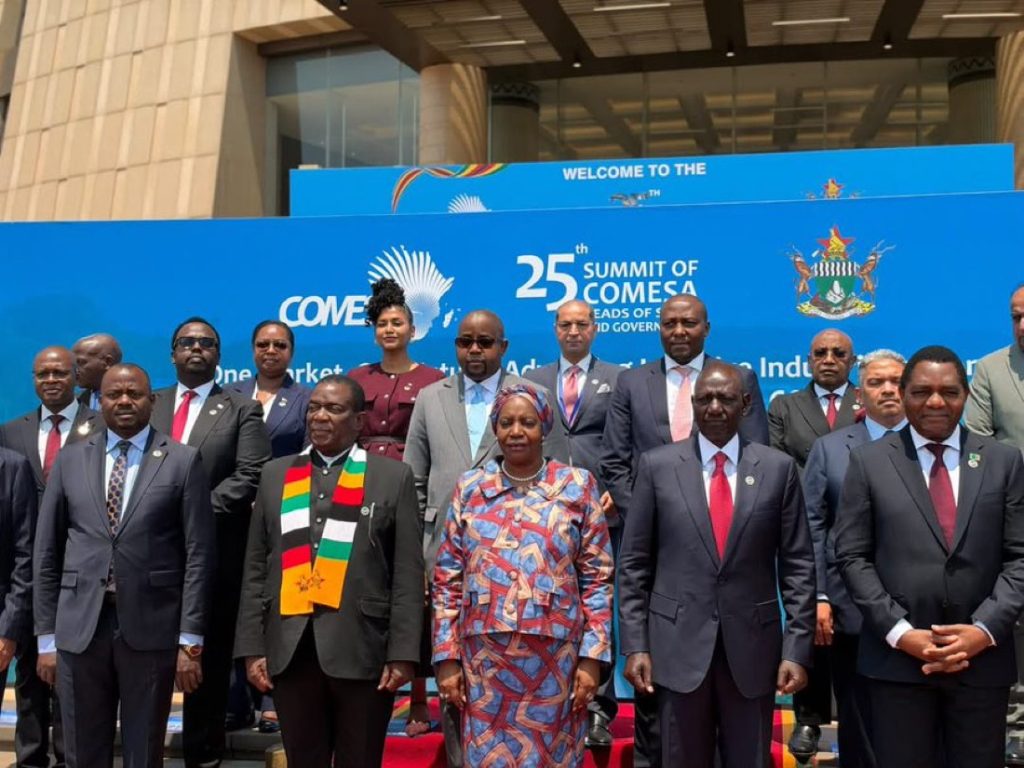
Addressing the 25th COMESA Summit of Heads of State and Government in Harare on Thursday, Mnangagwa warned that persistent infrastructure deficiencies, restrictive trade practices and policy inconsistencies continued to undermine the region’s economic integration ambitions.
Taking over from Kenyan President William Ruto for the 2026–2027 term, Mnangagwa pledged to prioritise value addition, regional industrial development and investment in critical infrastructure.
“Persistent non-tariff barriers, infrastructure gaps and policy mis-alignments require bold decisions,” Mnangagwa said.
“Likewise, simplified border procedures, the wider use of digital trade systems and emerging technologies should improve commerce and the movement of business persons across our countries.”
His remarks come as COMESA seeks to strengthen economic cooperation among its member states, with regional leaders facing growing pressure to translate longstanding integration commitments into tangible economic benefits.
Mnangagwa acknowledged progress in regional trade but stressed that greater efforts were necessary to unlock the bloc’s economic potential.
“It is commendable that since the establishment of the Free Trade Area in 2000, intra-COMESA exports have grown from approximately US$2 billion to over US$14 billion in 2025,” he said.
The figures represent a sevenfold increase in intra-regional exports over 25 years, although significant barriers to cross-border commerce remain.


Mnangagwa urged member states to accelerate industrial production, improve product quality, address transportation bottlenecks and review pricing structures that constrain regional competitiveness.
“I exhort us, therefore, to accelerate ongoing programmes to increase industrial production and productivity, enhance quality and standards, address transportation bottlenecks and rationalise pricing,” he said.
The Zimbabwean leader placed industrialisation and local processing of natural resources at the centre of his chairmanship, arguing that Africa must derive greater economic value from its mineral wealth and agricultural production.
He cited Zimbabwe’s policies promoting domestic mineral processing as an example of how resource-rich economies could increase the value of their exports.
“In the case of Zimbabwe, lessons from our policy decision that demand all resources to be locally processed, has seen a manifold increase in value of our minerals,” Mnangagwa said.
“The message to the region is that the natural endowments of Africa must industrialise our economies, create jobs and broad-based empowerment which improve the quality of lives of our peoples.”
He said Zimbabwe would champion agro-processing, cross-border agricultural and industrial parks, supply-chain harmonisation and climate-resilient agriculture during its tenure.
The priorities reflect a broader push to shift regional economies away from dependence on raw commodity exports towards manufacturing and higher-value production.

However, financing remains a major obstacle to achieving these ambitions.
Mnangagwa warned that high borrowing costs and mounting debt obligations were constraining investment in the infrastructure required to support regional economic transformation.
“The realization of our common vision and shared aspirations depend on investment and finance for the integration agenda,” he said.
“Roads, rail, energy infrastructure and digital networks require affordable, predictable and long-term financing.”
He challenged regional governments and financial institutions to develop alternative funding mechanisms capable of reducing reliance on expensive borrowing.
“It is now critically important to think outside the box on development financing models that will help bypass high borrowing costs and heavy debt obligations,” Mnangagwa said.
He called on trade, insurance and financial institutions, alongside development partners, to increase funding for infrastructure and productive investments across COMESA.
The President also raised concerns over limited access to finance for women, young entrepreneurs and micro, small and medium enterprises, saying their participation was essential to achieving inclusive economic growth.
He emphasised that regional integration should deliver practical benefits beyond governments and major corporations.
“As we implement the Medium-Term Strategic Plan, no one and no country should be left behind,” Mnangagwa said.
“Integration succeeds when its benefits impact the small traders crossing our borders; persons with disabilities and rural communities; the women processing food and the young graduate starting a digital business.”
The summit is being held under the theme, “One Market, One Future: Advancing Inclusive Industrialisation, Investment and Regional Integration in COMESA.”
Mnangagwa said the theme demanded concrete programmes capable of strengthening production, expanding markets and improving living standards.
“Our common market must enable enterprises to produce at scale, facilitate cross border movement of factors of production and reach new customers,” he said.
He also pledged Zimbabwe’s support for the implementation of the COMESA Medium-Term Strategic Plan for 2026–2030, which is scheduled for launch during the summit.
The plan is expected to guide the bloc’s regional integration priorities over the next five years, with Mnangagwa calling for measurable results, regular reporting and greater institutional accountability.
He acknowledged Ruto’s leadership, particularly Kenya’s efforts to advance digitalisation and regional value chains.
Turning to the role of the private sector, Mnangagwa welcomed recommendations emerging from the 19th COMESA Business Forum and Exhibition and the COMESA Green Industries Connect initiative.
He said the recommendations should inform the bloc’s implementation roadmap and ensure that regional policies respond to business needs.
Mnangagwa further emphasised the importance of peace, security and political cooperation, warning that transnational threats could undermine economic integration.
He pledged to strengthen preventive diplomacy and cooperation among member states while maintaining Zimbabwe’s foreign policy position of being a friend to all and an enemy of none.
Concluding his address, Mnangagwa invoked Zimbabwe’s development philosophy, arguing that Africa’s economic transformation must ultimately be driven by its own people.
“A country is built, ruled and prayed for by its own people,” he said.
“Likewise, the COMESA region must be modernised and industrialised through individual and collective efforts of its citizens.”
He urged regional leaders to move beyond declarations and deliver measurable economic progress.
“With unity of purpose, let us deliver on the promise of shared prosperity and a better future for the peoples of Africa,” Mnangagwa said.