




























By Staff Reporter

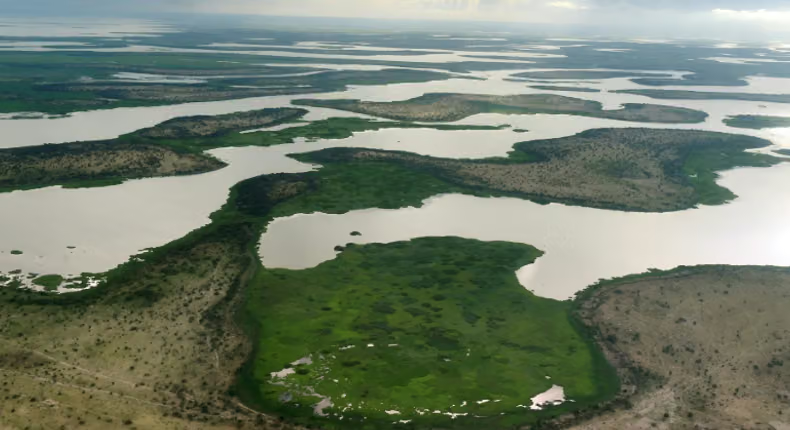
Africa is confronting a water crisis with consequences that stretch far beyond the shores of Lake Chad, where decades of environmental pressure have transformed one of the continent’s great inland water bodies into a warning sign of the mounting pressures facing its freshwater resources.
Lake Chad, shared by Chad, Cameroon, Niger and Nigeria, has lost roughly 90% of its surface area since the 1960s, according to widely cited estimates. Its decline has disrupted fishing, farming and livestock production and placed growing pressure on communities whose livelihoods depend on the lake and its surrounding wetlands.
The crisis has also become intertwined with wider challenges in the Lake Chad Basin, including food insecurity, poverty, population pressure and instability.
Now, an ambitious and controversial engineering proposal known as Transaqua is again attracting attention.
The project envisions transferring water from the Congo River Basin towards Lake Chad through a vast network of dams and a canal system stretching for about 2,400 kilometres. The cost has been estimated at more than $50 billion, making it one of Africa’s most expensive proposed water infrastructure projects.
Supporters argue that the project could provide a long-term lifeline for Lake Chad while creating new opportunities for agriculture, hydropower, transport and industrial development across central and west-central Africa.
But the scale of the proposal is also its greatest weakness.
Redirecting water between two major river basins would involve enormous financial, technical, environmental and political risks. It would require cooperation among multiple countries, massive infrastructure investment and a detailed assessment of how altering water flows in the Congo Basin could affect ecosystems and communities downstream.
The central question, therefore, is not simply whether Africa can engineer a way to put more water into Lake Chad.
It is whether the continent can afford to treat a complex ecological crisis as an engineering problem alone.
Lake Chad’s decline has been attributed to a combination of climate variability, changing rainfall patterns and rising human demand for water, including agricultural irrigation. The result has been a shrinking natural resource base for millions of people living around the basin.
That makes the lake’s future a major development and security issue.
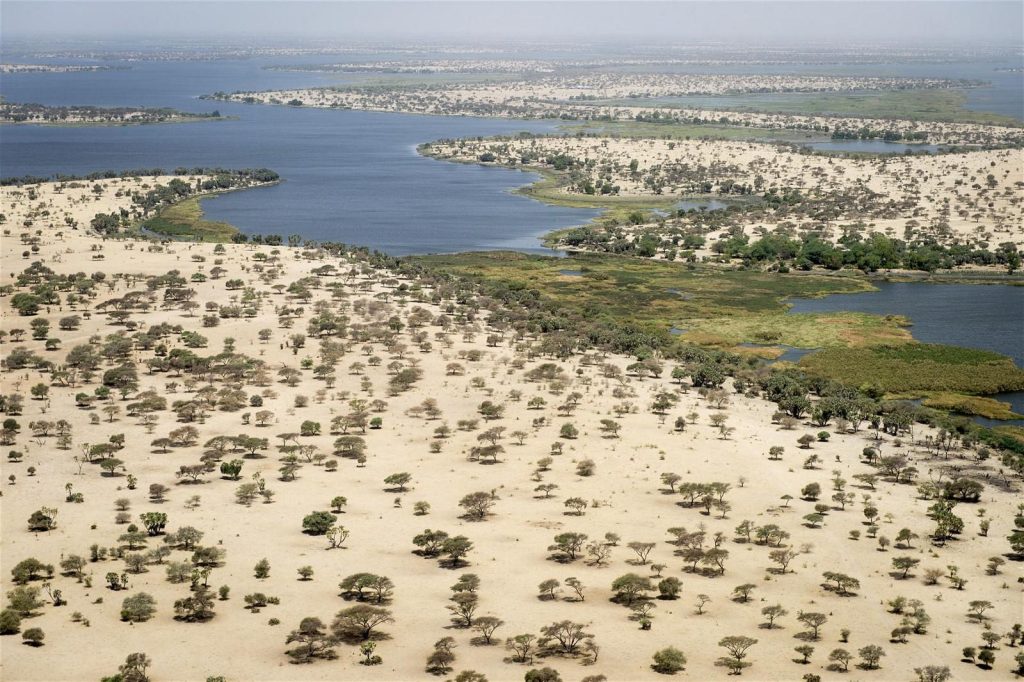
For communities already facing limited economic opportunities, the loss of productive fishing grounds and agricultural land can deepen poverty and intensify competition over scarce resources. In a region where instability has already displaced millions of people, further environmental degradation risks adding another layer to an already complex humanitarian crisis.
The Transaqua proposal seeks to address that crisis at a continental scale.
Under the most ambitious version of the plan, water would be diverted from tributaries of the Congo River system and transported northwards through a large canal. The project could potentially generate hydroelectric power and create an inland transport corridor while increasing water availability in the Lake Chad Basin.
That vision has obvious appeal.
Africa has long struggled with fragmented infrastructure, with major rivers and economic corridors often crossing national borders without corresponding investments in regional connectivity. A project that combines water security, energy generation, agriculture and transport could theoretically deliver benefits far beyond Lake Chad itself.
But critics and environmentalists have raised concerns about the consequences of moving large volumes of water from one ecosystem to another.
The Congo Basin is one of the world’s most important freshwater and ecological systems. Any major intervention would have to account for its own environmental needs, as well as the interests of countries and communities that depend on its rivers for fishing, transport, agriculture and energy.
There is also the question of economics.
A $50 billion price tag would make Transaqua a major test of Africa’s ability to mobilise long-term financing for cross-border infrastructure. Governments would need support from international financial institutions, development partners and private investors, while also convincing affected populations that the benefits would outweigh the disruption.
The history of the proposal illustrates the challenge. Various schemes to replenish Lake Chad have been discussed for decades, including smaller water-transfer options. The Transaqua concept emerged as the most ambitious version, but it has remained largely at the proposal and feasibility stage rather than becoming a fully financed construction project.
For now, Lake Chad’s predicament is a reminder that Africa’s water crisis is becoming increasingly urgent.
The continent has abundant water resources in some regions but severe shortages in others. Climate change is expected to intensify this uneven distribution, placing greater pressure on governments to develop strategies that combine conservation, efficient water use, climate adaptation and regional cooperation.
The danger is that waiting for a single mega-project to solve the problem could prove costly.
Even if Transaqua eventually moves forward, experts and policymakers will still need to address the immediate causes of Lake Chad’s deterioration. Better management of existing water resources, improved irrigation efficiency, restoration of wetlands and stronger regional institutions are likely to remain essential.
The $50 billion proposal may offer a potentially transformative solution, but it is also a stark reminder of the price of environmental neglect.
The real test for Africa will be whether it can save Lake Chad without creating new ecological problems elsewhere—and whether governments can turn the continent’s vast water resources into a source of shared prosperity rather than another arena for competition.
For the millions whose lives depend on Lake Chad, however, the debate is no longer theoretical.
The lake is shrinking, livelihoods are under pressure and the window for action is narrowing.