























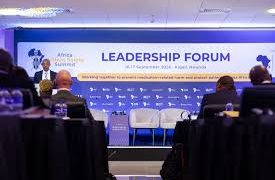



Nairobi|| Africa will require at least two additional Dangote-sized refineries to meet rising fuel demand, according to the Africa Finance Corporation’s State of Africa’s Infrastructure Report (SAIR) 2026 unveiled on Thursday.Rita Babihuga-Nsanze, chief economist and director of Research and Strategy at AFC, presented the 2026 report at the ongoing Africa We Build Summit in Nairobi, Kenya.

She said the findings highlight the continent’s continued vulnerability stemming from its reliance on exporting raw materials and importing refined products.
“In refined fuels, around 70 percent of Africa’s consumption is imported, exposing the continent to global supply shocks and chokepoints. Demand is projected to grow by 56 percent by 2040, creating an import gap of 86 million tonnes, equivalent to at least two additional Dangote-sized refineries. The opportunity to build refining capacity is particularly strong in East Africa, where infrastructure remains limited,” she said.
Babihuga-Nsanze explained that the report, titled “The Africa We Build: From Capital to Systems,” shifts the narrative on Africa’s infrastructure challenge from scarcity to connectivity.According to her, Africa’s problem is no longer the absence of capital, infrastructure, or resources, but the lack of systems to connect them into productive, scalable outcomes.
“Across capital, energy, transport, digital infrastructure, and industrial inputs, the resources are already present and expanding. What is missing are the systems that bring them together into industrial capacity and investable opportunities,” she said.
The report introduces two key additions. The first is an updated AFC domestic capital dataset, providing a country-by-country analysis of capital pools across banking, pensions, insurance, sovereign funds, and development finance institutions.
It estimates that Africa holds more than $4 trillion in domestic capital, which continues to grow but remains significantly underutilised, largely due to weak intermediation into long-term infrastructure and industrial investments.
The second is a new map combining transport systems with mineral endowments, offering a unified view of infrastructure and resource geography. The report argues that industrialisation requires aligning these two elements, which have historically been developed in isolation.On financing, the report notes a sharp decline in external flows, with official development assistance to Africa falling by 23 percent in 2025, the largest annual drop on record. However, it argues that domestic capital could offset this gap if effectively mobilised and deployed.
In transport and logistics, AFC criticises the continent’s long-standing “pit-to-port” model focused on exporting raw commodities. It calls for a shift toward integrated transport systems that support domestic trade and industrialisation by linking resources, energy, and markets.
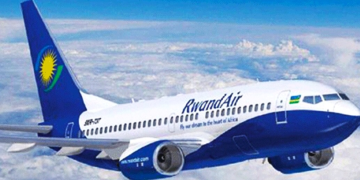
The report also highlights aviation as a key enabler of trade under the African Continental Free Trade Area (AfCFTA), noting that countries such as Kenya, Rwanda, and Ethiopia have significantly boosted GDP contribution and job creation through liberalisation, infrastructure investment, and strong national carriers.
On energy, AFC calls for a broader approach beyond household electrification to include powering industries and economies. Africa currently adds between six point five and eight gigawatts of power annually, far below the estimated 20 gigawatts required to meet development needs.