
By a Correspondent


Nigeria Customs Service (NCS) and the African Export-Import Bank (Afreximbank) have strengthened their partnership to accelerate the implementation of the African Continental Free Trade Area (AfCFTA), positioning Nigeria as a key driver of Africa’s expanding single market.
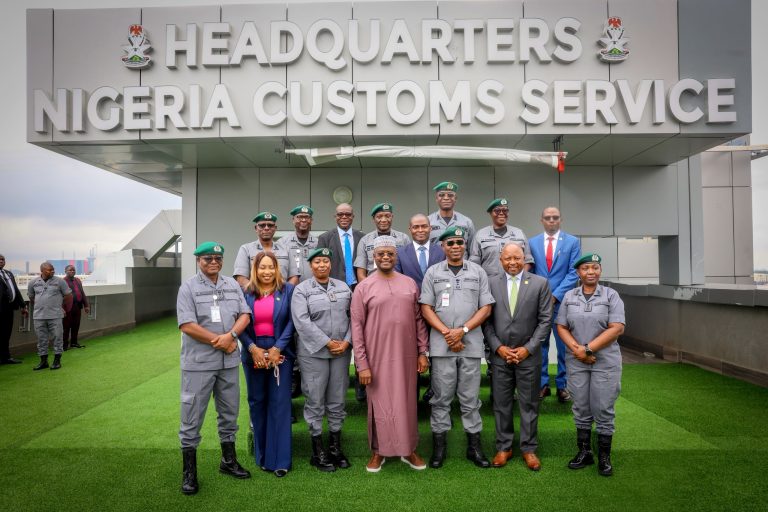
The renewed collaboration was reaffirmed during a meeting in Abuja between Afreximbank President and Chairman of the Board of Directors, Dr George Elombi, and Comptroller-General of Customs Adewale Adeniyi.
The discussions focused on expanding trade facilitation, harmonising customs procedures, strengthening regional transit systems and developing one-stop border posts to ease the movement of goods across African borders.
The partnership comes as African governments intensify efforts to implement the AfCFTA, which is expected to create a single market of more than 1.4 billion people with a combined gross domestic product exceeding US$3.4 trillion.
Adeniyi said the partnership was built on the conviction that Africa’s economic future depends on stronger trade among African countries rather than continued reliance on overseas markets.
“We are building a partnership founded on a single conviction: that Africa’s best trading partners are within Africa itself, and our prosperity will be built on the trade we conduct within ourselves,” he said.
He said the collaboration would expand Afreximbank’s regional transit initiatives, promote the establishment of one-stop border posts along strategic trade corridors and encourage the adoption of international best practices in customs administration.
According to Adeniyi, Afreximbank’s support for regional transit systems is already improving coordination between customs authorities and streamlining cross-border trade.
“Our objective is to establish one-stop border posts and adopt global best practices that reduce delays, lower trade costs and make the movement of legitimate goods much easier,” he said.
“When traders spend less time at borders and face fewer administrative bottlenecks, businesses become more competitive and economies become more productive.”


Elombi praised the Nigeria Customs Service for taking a leadership role in advancing regional integration, saying the institution had demonstrated a strong commitment to transforming trade across the continent.
“We have the resources, and you have the will. Together, we can make this partnership work for Africa,” Elombi said.
He added that Afreximbank remained committed to supporting initiatives that strengthen trade facilitation and enable African businesses, manufacturers and exporters to benefit fully from the opportunities created by the AfCFTA.
The meeting also reviewed progress made since the inaugural Customs Partnership for African Cooperation in Trade (C-PACT), held in Abuja in November 2025, which brought together customs administrations, development partners and private sector stakeholders to improve customs cooperation across Africa.
Separately, Adeniyi identified the lack of interoperable customs systems as one of the biggest obstacles to the successful implementation of the AfCFTA.
Speaking during the signing of a 20-year public-private partnership agreement between the AfCFTA Secretariat and Bergmans Security for the AfCFTA Customs Modernisation Project, he said differing levels of technological development among customs administrations continue to impede seamless trade.
“The success of the AfCFTA will depend significantly on our ability to connect our systems and ensure customs administrations can exchange information seamlessly,” Adeniyi said.
“What Africa needs is a customs ecosystem where information moves freely, borders are more efficient and trade is facilitated through technology.”
He described the selection of Nigeria’s Bergmans Security to implement the project as recognition of the country’s progress in customs modernisation and digital transformation.
AfCFTA Secretary-General Wamkele Mene said the continental body had adopted Nigeria’s customs modernisation model after witnessing its success in deploying digital technologies to improve efficiency and revenue collection.
He said the partnership would help establish a continent-wide interoperable customs system, enabling businesses to access larger markets while reducing border delays and the cost of doing business across Africa.
The AfCFTA Customs Modernisation Project is expected to strengthen customs cooperation, harmonise digital customs platforms, improve revenue collection and accelerate implementation of the continent’s flagship free trade agreement, opening new opportunities for manufacturers, exporters and investors across Africa.