
Kelvin Jakachira


SALIMA, Malawi – Ministers responsible for Foreign Affairs, Defence, Public Security and State Security from across the Southern African Development Community (SADC) convened in Salima, Malawi, for the 28th SADC Ministerial Committee of the Organ on Politics, Defence and Security Cooperation, where they reviewed the region’s peace, security and political landscape.
The high-level meeting served as a key platform for member states to assess the prevailing security situation in Southern Africa, exchange views on emerging challenges and strengthen regional cooperation aimed at safeguarding peace and stability.
The Ministerial Committee, one of SADC’s principal decision-making bodies on political, defence and security matters, brought together ministers tasked with overseeing the implementation of the regional bloc’s agenda on conflict prevention, peacebuilding, democracy and good governance.
Deliberations focused on political and security developments affecting the region, with ministers examining progress made in implementing previous decisions of the SADC Organ as well as strategies to address existing and emerging threats.
The meeting also underscored the importance of collective action in tackling transnational security challenges, including terrorism, violent extremism, organised crime, human trafficking, cybercrime and cross-border criminal activities, which continue to pose risks to regional stability.
Ministers reaffirmed the need for closer collaboration among member states, enhanced intelligence sharing and coordinated security operations to ensure that Southern Africa remains peaceful, secure and conducive to economic growth and investment.
The committee further emphasised the importance of promoting democratic governance, constitutionalism and the rule of law as essential pillars for sustainable peace and development across the region.
The ministers met in Malawi as the region faces a wide range of traditional and emerging security threats that continue to shape the agenda of the SADC Organ on Politics, Defence and Security Cooperation.
The biggest security threat remains the Islamist insurgency in northern Mozambique’s Cabo Delgado Province. Since 2017, militants linked to the Islamic State have carried out attacks that have killed thousands and displaced hundreds of thousands of people. SADC has deployed a regional military mission to support Mozambique in combating the insurgency. The intervention of Rwanda has greatly helped the situation as most territories that had been seized by the terror outfit, have now be restored to state authority.
The region is also struggling with cross-border criminal networks that continue to threat regional cohesion: Exploiting porous borders within the SADC region, the networks are involved in human trafficking, drug trafficking, illegal firearms trafficking, vehicle theft, smuggling of goods and money laundering
The ongoing conflict in the eastern Democratic Republic of Congo remains one of the region’s most significant security challenges. Armed groups continue to destabilise the area, creating a humanitarian crisis and threatening regional stability. The militias such as the FDLR are also causing a wider security threat in the Great Lakes region.
The SADC Ministerial Committee of the Organ on Politics, Defence and Security Cooperation plays a critical role in coordinating regional responses to political and security issues. It provides strategic policy guidance to the SADC Organ on Politics, Defence and Security Cooperation and oversees the implementation of initiatives aimed at conflict prevention, mediation, peace support operations and regional security cooperation.
Its recommendations are submitted to the SADC Organ Troika and ultimately to the SADC Summit of Heads of State and Government for consideration and implementation.
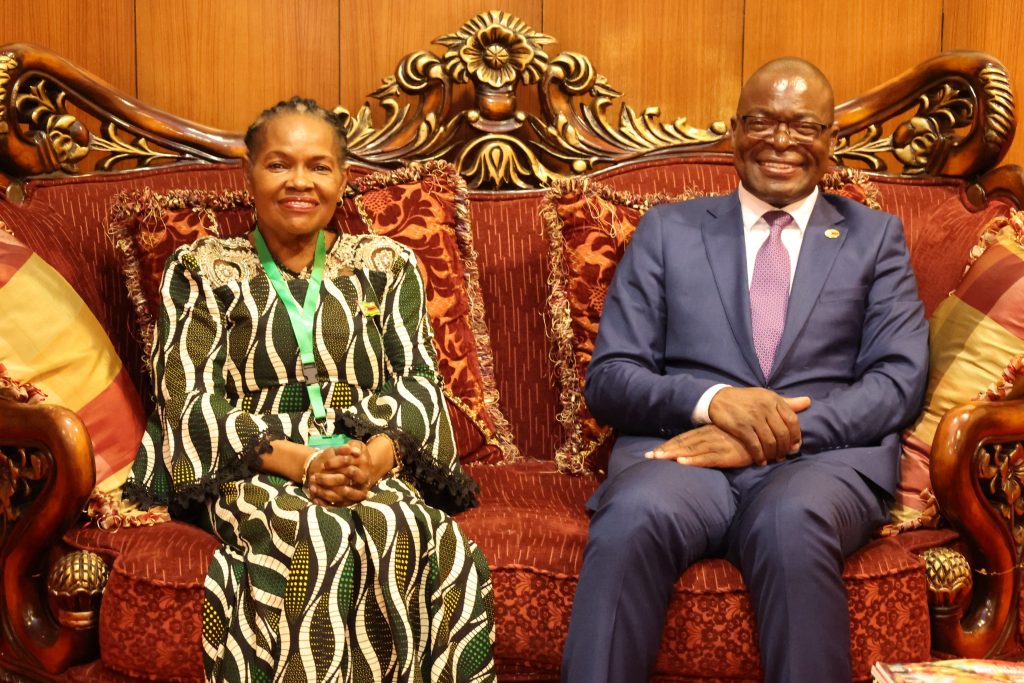
On the margins of the meeting, held on Friday 17th July, Zimbabwe’s Minister of Foreign Affairs and International Trade, Professor Amon Murwira, received a courtesy call from Madagascar’s Minister of Foreign Affairs, Ms. Christine Razanamahasoa.
The meeting reaffirmed the strong bilateral relations between Zimbabwe and Madagascar, with both Ministers discussing ways to enhance cooperation under the framework of South-South cooperation.
Madagascar also commended Zimbabwe for its regional leadership, congratulating the country on its election to the United Nations Security Council and its forthcoming COMESA Chairmanship, while reaffirming the two nations’ shared commitment to regional integration and African solidarity.
Zimbabwe was elected to serve as a non-permanent member of the UN Security Council for the 2027-2028 term after receiving overwhelming support from the United Nations General Assembly. The country will become one of the African representatives on the 15-member council, which is responsible for maintaining international peace and security.
Madagascar’s Foreign Minister expressed her country’s appreciation to Zimbabwe for the valuable support it provided during its tenure as Chair of SADC, particularly in relation to Madagascar’s national processes.