




























Business Reporter

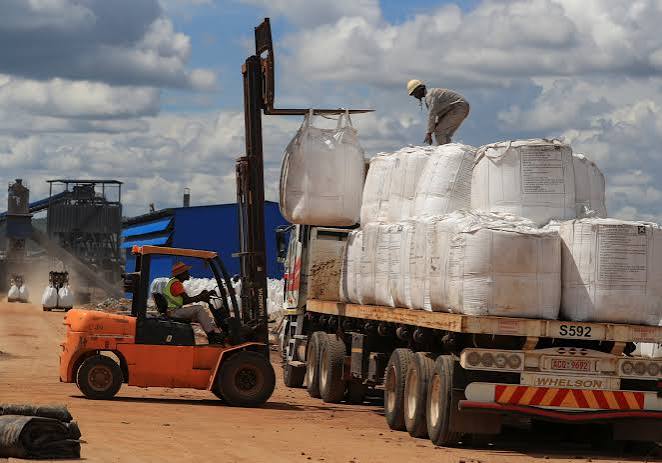
Large volumes of lithium concentrate from Zimbabwe are being stockpiled in Mozambique as mining companies accelerate exports ahead of the country’s planned concentrate export ban, raising fresh concerns over whether Zimbabwe is deriving sufficient economic value from its strategic mineral resources.
Centre for Natural Resources Governance (CNRG) executive director Farai Maguwu said information gathered from truck drivers transporting lithium indicated that storage facilities at the Port of Beira were struggling to cope with growing volumes of concentrate coming from Zimbabwe.
“My friends who are truck drivers have separately told me that the Port of Beira has long run out of storage space for lithium coming from Zimbabwe,” Maguwu said.

He said Chinese companies operating in Zimbabwe’s lithium sector had responded by establishing additional warehouses in and around Beira to accommodate the growing stockpiles.
“The Chinese have now built their own warehouses in and around Beira to store the lithium. Their logic is that it is better to move the lithium out of Zimbabwe quickly ahead of the October deadline and store it in Mozambique before export,” he said.
Maguwu said some shipments were being routed through Mozambique, while others were being transported to warehouses in Johannesburg and Durban, South Africa, for onward export to international markets.
He cited information from a truck driver transporting 36 tonnes of lithium concentrate from Prospect Lithium Zimbabwe to Johannesburg.
“The driver told me Prospect is shipping between 150 and 200 trucks carrying around 30 tonnes each per day. He also said that in the past, more than 400 trucks left the mine daily,” Maguwu said.
Maguwu argued that Zimbabwe could have extracted significantly greater economic value from its lithium resources through stronger beneficiation and value-addition policies.
“I am 1000 percent convinced that proper management of lithium alone could have changed the Zimbabwean economy,” he said.
He noted that at the height of the global lithium boom in late 2022, spodumene concentrate prices rose above US$6,400 per tonne, as demand for lithium surged on the back of the global transition to electric vehicles and growing battery manufacturing capacity.
However, Maguwu said the environmental costs of lithium mining were becoming increasingly visible in mining communities.
“What is most visible in Goromonzi is the ecological footprint. The story is the same throughout the country. Mining generates billions annually, but communities are often left with open pits and environmental damage,” he said.
Maguwu warned that Zimbabwe risked repeating the governance failures associated with the exploitation of Marange diamonds unless greater transparency and accountability were introduced in the lithium sector.
“We have often talked of the Marange US$15 billion heist. The fact is Zimbabwe’s lithium is following in the footsteps of Marange diamonds. It is theirs to loot,” he said.
The concerns come as Zimbabwe moves towards implementing a ban on the export of lithium concentrate as part of efforts to force greater local processing and value addition.
The ban is scheduled to take effect on 1 January 2027. Lithium producers are required to commit in writing to timelines for completing processing facilities as a condition for continuing to export concentrate until the deadline.
Zimbabwe currently has one completed lithium sulphate processing plant, while two other processing facilities are under construction.
Mining companies have reportedly sought an extension of the export deadline, with the Government’s decision expected to determine which producers will be permitted to continue exporting concentrate beyond January 2027.
Zimbabwe is one of Africa’s largest lithium producers and has attracted billions of dollars in investment, particularly from Chinese mining companies seeking supplies of the critical mineral used in rechargeable batteries and electric vehicles.