Business Correspondent


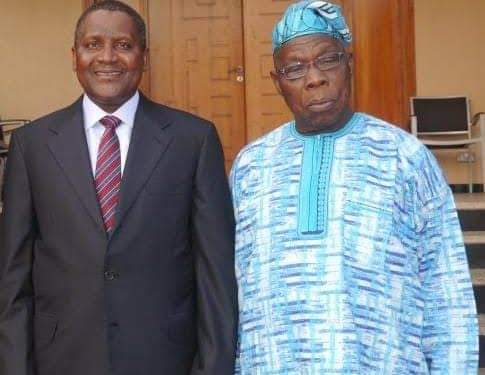
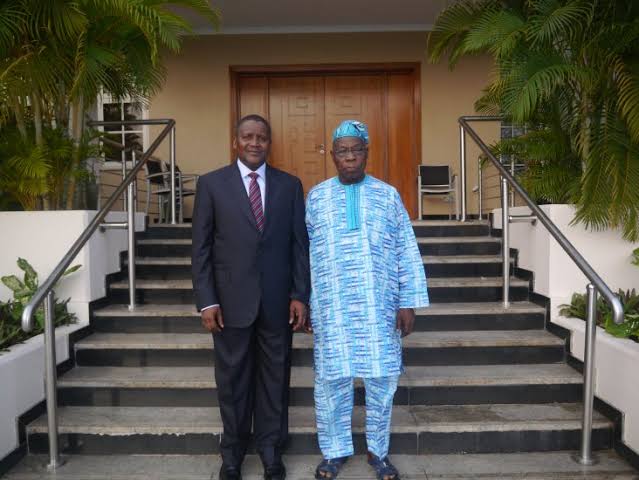
A 5am telephone call from former Nigerian President Olusegun Obasanjo to billionaire businessman Aliko Dangote in 2003 played a pivotal role in pushing him from cement importing into large-scale domestic production.
Obasanjo recounted the encounter during the groundbreaking ceremony for Dangote’s East Africa Petroleum Refinery and Petrochemicals project in Lamu, Kenya.
According to the former Nigerian leader, he was concerned that Nigeria was importing cement despite having abundant limestone, the key raw material required to manufacture the product.
He said he called Dangote early in the morning and asked why he continued importing cement instead of producing it locally.
Dangote’s response, according to Obasanjo, was purely commercial — importing cement was more profitable than manufacturing it.
Obasanjo then challenged the businessman to find a way of making local production commercially viable.
“Aliko, tell me, what can I do for you and for myself to make you produce cement?” Obasanjo recalled asking Dangote.
The discussion eventually contributed to a change in government policy, under which companies seeking licences to import cement were required to demonstrate credible plans to establish domestic production capacity.
Dangote responded by proposing a cement plant with an annual production capacity of five million tonnes.
Obasanjo said some government officials initially doubted the proposal and warned him that Dangote was merely seeking an import licence.
Despite the scepticism, the former Nigerian president said he backed the project and personally monitored its progress.
He even stationed two security personnel at the construction site to keep track of developments and would call Dangote whenever work appeared to be slowing down.
Dangote later joked that Obasanjo had effectively become his site manager.
The resulting plant at Obajana in Kogi State was commissioned in 2007, shortly before Obasanjo left office. The project subsequently became a foundation for Dangote’s expansion across Africa.
Today, Dangote Cement has a production capacity of about 55 million tonnes per year across its African operations. The company describes itself as the leading cement producer in sub-Saharan Africa.
The Obasanjo-Dangote story has since become an example of how government policy and private-sector investment can combine to replace imports with domestic manufacturing.
The businessman’s expansion has also gone beyond cement. Dangote has invested heavily in sectors including sugar, flour, fertiliser and petroleum, culminating in the development of the Dangote Refinery in Nigeria.